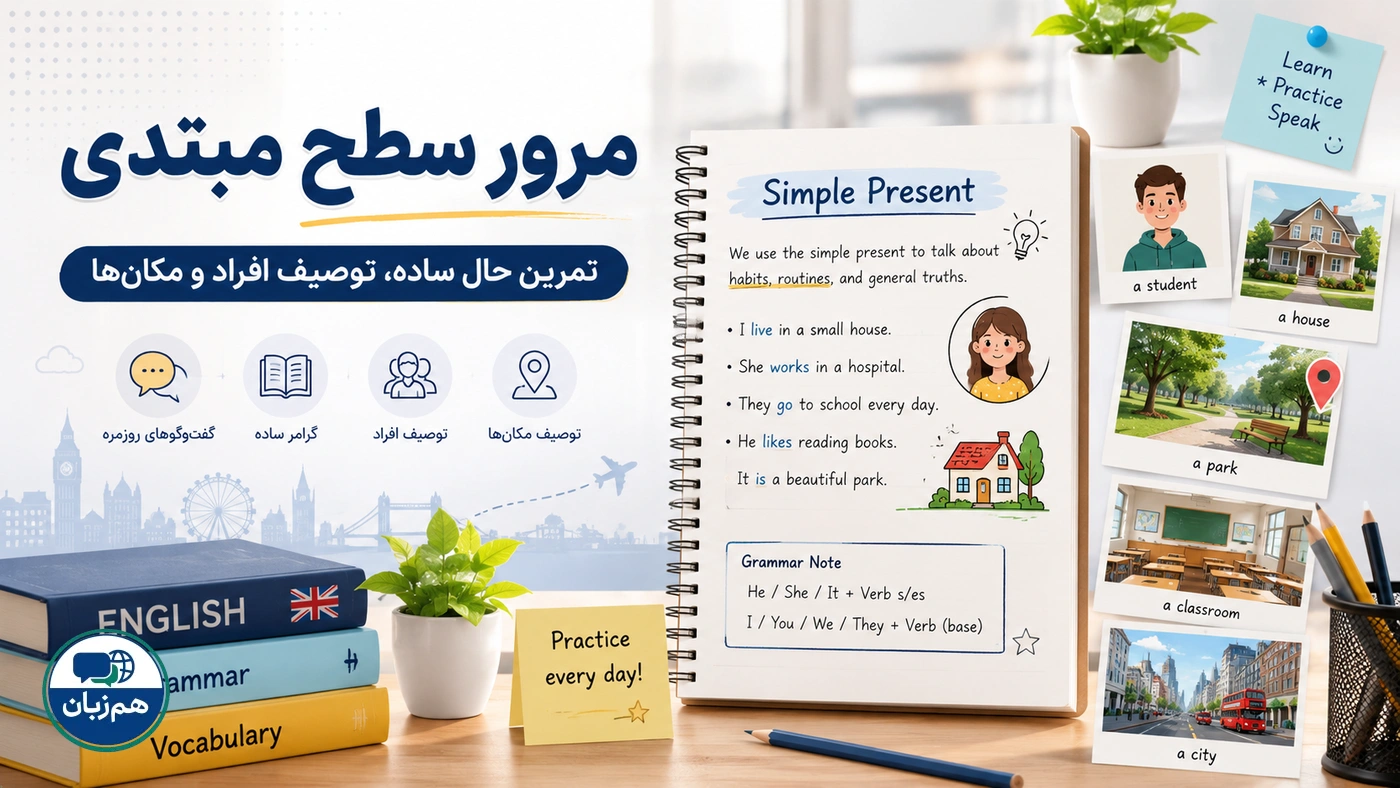
مرور سطح مبتدی؛ تمرین حال ساده، توصیف افراد و مکانها
 منبع: https://rasanika.com
یادگیری زبان انگلیسی در سطح مبتدی زمانی نتیجهبخش است که زبانآموز فقط به حفظ کردن واژهها و قوانین گرامری اکتفا نکند، بلکه بتواند آموختههای خود را در جملهسازی، مکالمه، توصیف و پاسخگویی به پرسشهای ساده به کار ببرد. در سطح A1، سه مهارت اهمیت ویژهای دارند: استفاده درست از زمان حال ساده، توصیف افراد و صحبت کردن درباره مکانها. این سه موضوع پایه بسیاری از مکالمات روزمره هستند و تسلط بر آنها کمک میکند زبانآموز بتواند درباره زندگی شخصی، خانواده، دوستان، محل زندگی، عادتها و فعالیتهای روزانه خود صحبت کند.
در این مرور جامع، ابتدا ساختار و کاربرد زمان حال ساده را بررسی میکنیم، سپس به سراغ توصیف ظاهر و شخصیت افراد میرویم و در ادامه روش معرفی مکانها را تمرین میکنیم. در پایان هر بخش نیز تمرینهایی ارائه شده است تا بتوانید میزان یادگیری خود را بسنجید و نکات مهم را بهتر در ذهن تثبیت کنید.
زمان حال ساده در زبان انگلیسی چیست؟
زمان حال ساده یا Simple Present یکی از پرکاربردترین زمانها در زبان انگلیسی است. از این زمان برای صحبت درباره کارهای همیشگی، عادتها، برنامههای منظم، واقعیتهای عمومی و شرایط نسبتاً ثابت استفاده میشود.
برای مثال، وقتی درباره برنامه روزانه خود صحبت میکنیم، معمولاً به زمان حال ساده نیاز داریم:
I wake up at seven every day.
I go to work by bus.
She studies English in the evening.
We live in a small apartment.
در این جملهها، درباره فعالیتهایی صحبت میکنیم که بهصورت منظم یا معمول انجام میشوند، نه کاری که فقط همین لحظه در حال انجام است.
کاربردهای اصلی زمان حال ساده
صحبت درباره عادتها و برنامههای روزانه
مهمترین کاربرد حال ساده، بیان کارهایی است که همیشه، معمولاً یا بهطور منظم انجام میشوند.
I drink tea every morning.
He walks to school.
They play football on Fridays.
My mother cooks dinner at home.
کلماتی مانند every day، every week، usually، always و often معمولاً نشان میدهند که جمله درباره یک عادت یا فعالیت تکرارشونده است.
بیان واقعیتهای عمومی
برای بیان واقعیتهایی که همیشه یا در بیشتر مواقع درست هستند نیز از حال ساده استفاده میکنیم.
The sun rises in the east.
Water boils at 100 degrees Celsius.
Birds have wings.
Winter comes after autumn.
این جملهها به یک زمان مشخص محدود نیستند و درباره واقعیتهای عمومی صحبت میکنند.
صحبت درباره علاقه، نظر و احساس
افعالی مانند like، love، want، need، know و understand معمولاً در زمان حال ساده به کار میروند.
I like music.
She loves animals.
We need more time.
He knows the answer.
They want a new car.
در سطح مبتدی، بهتر است این افعال را همراه با چند جمله ساده تمرین کنید؛ زیرا در مکالمات روزمره بسیار پرکاربرد هستند.
بیان موقعیتهای نسبتاً ثابت
از حال ساده برای صحبت درباره محل زندگی، شغل، شرایط خانوادگی یا ویژگیهایی که در حال حاضر ثابت هستند نیز استفاده میشود.
I live in Tehran.
My father works in a bank.
Sara has two brothers.
Their house is near the park.
ساختار جمله مثبت در زمان حال ساده
در جمله مثبت، ساختار اصلی به شکل زیر است:
فاعل + فعل اصلی + ادامه جمله
برای فاعلهای I، you، we و they، فعل به شکل ساده استفاده میشود:
I work in an office.
You speak English well.
We study together.
They live near the school.
اما برای فاعلهای سومشخص مفرد، یعنی he، she و it، معمولاً به انتهای فعل حرف s یا es اضافه میشود:
He works in an office.
She speaks English well.
It rains a lot here.
Ali lives near the school.
این تفاوت یکی از مهمترین نکات گرامر مبتدی انگلیسی است. بسیاری از زبانآموزان فراموش میکنند که برای he، she و it باید شکل فعل تغییر کند.
قوانین اضافه کردن s و es
در بیشتر افعال، فقط حرف s اضافه میشود:
شکل پایه فعل | سومشخص مفرد |
work | works |
read | reads |
eat | eats |
play | plays |
drink | drinks |
اگر فعل به حروفی مانند s، sh، ch، x یا o ختم شود، معمولاً es میگیرد:
شکل پایه فعل | سومشخص مفرد |
watch | watches |
wash | washes |
go | goes |
do | does |
fix | fixes |
اگر فعل به حرف y ختم شود و قبل از y یک حرف بیصدا قرار داشته باشد، y به i تبدیل میشود و سپس es اضافه میشود:
شکل پایه فعل | سومشخص مفرد |
study | studies |
carry | carries |
try | tries |
اما اگر قبل از y یک حرف صدادار باشد، فقط s اضافه میشود:
play → plays
enjoy → enjoys
buy → buys
فعل have در سومشخص مفرد
فعل have یک شکل بیقاعده دارد:
I have a sister.
You have a new phone.
We have a small garden.
She has a sister.
He has a new phone.
بنابراین برای he، she و it از has استفاده میکنیم.
ساختار جمله منفی در زمان حال ساده
برای منفی کردن حال ساده از do not یا does not استفاده میکنیم.
برای I، you، we و they:
فاعل + do not + فعل ساده
I do not drink coffee.
You do not work here.
We do not watch television at night.
They do not live in this city.
شکل کوتاه do not برابر با don’t است:
I don’t drink coffee.
We don’t watch television at night.
برای he، she و it:
فاعل + does not + فعل ساده
He does not drink coffee.
She does not work here.
It does not open easily.
شکل کوتاه does not برابر با doesn’t است:
He doesn’t drink coffee.
She doesn’t work here.
نکته بسیار مهم این است که بعد از does not یا doesn’t، فعل اصلی دیگر s نمیگیرد.
درست:
She doesn’t like milk.
He doesn’t work on Sundays.
نادرست:
She doesn’t likes milk.
He doesn’t works on Sundays.
دلیل این موضوع آن است که نشانه سومشخص مفرد در کلمه does قرار گرفته است و فعل اصلی باید به شکل ساده برگردد.
ساختار پرسشی زمان حال ساده
برای ساختن سؤال، do یا does را در ابتدای جمله قرار میدهیم.
برای I، you، we و they:
Do + فاعل + فعل ساده؟
Do you speak English?
Do they live near here?
Do we need a taxi?
Do you play tennis?
برای he، she و it:
Does + فاعل + فعل ساده؟
Does he speak English?
Does she live near here?
Does it work well?
Does your brother play tennis?
در سؤالهایی که با does ساخته میشوند نیز فعل اصلی s نمیگیرد.
درست:
Does she work here?
Does he like pizza?
نادرست:
Does she works here?
Does he likes pizza?
پاسخ کوتاه به سؤالهای حال ساده
برای پاسخ مثبت و منفی کوتاه میتوانیم از ساختارهای زیر استفاده کنیم:
سؤال | پاسخ مثبت | پاسخ منفی |
Do you work here? | Yes, I do. | No, I don’t. |
Do they study English? | Yes, they do. | No, they don’t. |
Does she live in London? | Yes, she does. | No, she doesn’t. |
Does he drive to work? | Yes, he does. | No, he doesn’t. |
در مکالمه روزمره، پاسخ کوتاه طبیعیتر از تکرار کامل جمله است. البته میتوان پس از پاسخ کوتاه، توضیح بیشتری نیز اضافه کرد:
Do you exercise every day?
Yes, I do. I go for a walk every morning.
قیدهای تکرار در زمان حال ساده
قیدهای تکرار نشان میدهند یک فعالیت با چه میزان تکرار انجام میشود. پرکاربردترین آنها عبارتاند از:
قید | معنی تقریبی |
always | همیشه |
usually | معمولاً |
often | اغلب |
sometimes | گاهی |
rarely | بهندرت |
never | هرگز |
این قیدها معمولاً قبل از فعل اصلی قرار میگیرند:
I always eat breakfast.
She usually walks to work.
They often visit their grandparents.
We sometimes watch movies together.
He never drinks coffee.
اما اگر فعل جمله to be باشد، قید تکرار معمولاً بعد از آن قرار میگیرد:
I am usually tired in the evening.
She is always friendly.
They are often busy.
He is never late.
عبارتهایی مانند every day، once a week، twice a month و on Fridays معمولاً در پایان جمله قرار میگیرند:
I study English every day.
We go swimming once a week.
She visits her family twice a month.
They play football on Fridays.
تمرین زمان حال ساده
جملههای زیر را با شکل درست فعل کامل کنید:
My brother ___ to school by bus.
go / goesWe ___ dinner at seven.
eat / eatsSara ___ English every evening.
study / studiesThey ___ in a large house.
live / livesHe ___ coffee in the morning.
drink / drinks
پاسخها:
goes
eat
studies
live
drinks
اکنون جملههای زیر را منفی کنید:
She likes cold weather.
They work on Saturdays.
He plays basketball.
I watch television every night.
Mary lives near the station.
پاسخهای پیشنهادی:
She doesn’t like cold weather.
They don’t work on Saturdays.
He doesn’t play basketball.
I don’t watch television every night.
Mary doesn’t live near the station.
سپس از جملههای زیر سؤال بسازید:
You speak French.
He works in a hospital.
They have a car.
She goes to the gym.
Your parents live in this city.
پاسخهای پیشنهادی:
Do you speak French?
Does he work in a hospital?
Do they have a car?
Does she go to the gym?
Do your parents live in this city?
چگونه افراد را به انگلیسی توصیف کنیم؟
توصیف افراد یکی از مهمترین مهارتهای مکالمه در سطح A1 است. ممکن است بخواهید درباره یکی از اعضای خانواده، دوست، همکار، معلم یا حتی شخصیت مورد علاقه خود صحبت کنید. برای یک توصیف کامل و منظم، بهتر است اطلاعات را در چند بخش بیان کنید:
معرفی فرد
سن و شغل
ظاهر
شخصیت
علاقهها و فعالیتهای روزانه
برای مثال:
My friend’s name is Reza. He is 25 years old. He is a student. He is tall and slim. He has short black hair and brown eyes. He is friendly and hardworking. He likes football and music.
این متن کوتاه است، اما اطلاعات اصلی را به شکلی روشن و منظم ارائه میدهد.
معرفی اولیه یک فرد
برای معرفی، میتوانیم از جملههای ساده زیر استفاده کنیم:
This is my friend, Mina.
His name is Amir.
Her name is Sarah.
He is my brother.
She is my English teacher.
They are my classmates.
برای بیان سن از فعل to be استفاده میکنیم:
I am 20 years old.
She is 30 years old.
He is 18.
My father is 55 years old.
در انگلیسی نمیگوییم “I have 20 years.” ساختار درست برای بیان سن همیشه با فعل to be ساخته میشود.
برای بیان شغل نیز میتوان از جملههای زیر استفاده کرد:
He is a doctor.
She is a teacher.
My brother is an engineer.
Reza works in a restaurant.
Mary studies at university.
واژگان مربوط به ظاهر افراد
برای توصیف قد و اندام میتوان از واژههای زیر استفاده کرد:
واژه | معنی |
tall | قدبلند |
short | کوتاهقد |
medium-height | با قد متوسط |
slim | لاغر و متناسب |
thin | لاغر |
heavy | درشتاندام |
strong | قوی |
young | جوان |
old | مسن |
middle-aged | میانسال |
مثال:
He is tall and strong.
She is short and slim.
My uncle is middle-aged.
They are young.
در توصیف ظاهر، بهتر است از واژههای محترمانه استفاده کنیم. بعضی کلمات ممکن است از نظر دستوری درست باشند، اما در موقعیتهای اجتماعی مناسب نباشند.
توصیف مو
برای صحبت درباره مو معمولاً از فعل have یا has استفاده میکنیم:
I have long hair.
She has short hair.
He has curly hair.
They have dark hair.
واژههای پرکاربرد برای توصیف مو عبارتاند از:
ویژگی | واژه انگلیسی |
بلند | long |
کوتاه | short |
صاف | straight |
فر | curly |
موجدار | wavy |
مشکی | black |
قهوهای | brown |
بلوند | blond |
خاکستری | gray |
میتوان چند صفت را کنار هم قرار داد:
She has long, straight, black hair.
He has short, curly, brown hair.
My grandmother has short gray hair.
ترتیب معمول صفتها برای مو اغلب شامل طول، حالت و رنگ است.
توصیف چشم و چهره
برای توصیف چشم نیز از have و has استفاده میکنیم:
She has blue eyes.
He has brown eyes.
My sister has big green eyes.
برای چهره میتوان از این ترکیبها استفاده کرد:
a round face
a long face
a small nose
a big smile
a beard
a mustache
glasses
مثال:
He has a round face and a beard.
She has a small nose and a friendly smile.
My teacher wears glasses.
Ali has a mustache.
توصیف شخصیت افراد
ظاهر فقط بخشی از توصیف است. برای معرفی بهتر یک فرد، باید درباره ویژگیهای اخلاقی و رفتاری او نیز صحبت کنیم.
صفت | معنی |
friendly | خوشبرخورد |
kind | مهربان |
polite | مؤدب |
funny | بامزه |
quiet | ساکت |
shy | خجالتی |
active | فعال |
hardworking | سختکوش |
helpful | کمککننده |
patient | صبور |
smart | باهوش |
serious | جدی |
talkative | پرحرف |
honest | صادق |
برای استفاده از این صفتها، معمولاً از فعل to be استفاده میکنیم:
She is friendly and kind.
He is quiet but very helpful.
My teacher is patient.
Reza is funny and talkative.
My sister is shy.
کلمه but برای بیان تفاوت یا تضاد میان دو ویژگی به کار میرود:
He is quiet but friendly.
She is young but very responsible.
My boss is serious but kind.
کلمه and نیز برای اضافه کردن ویژگی مشابه استفاده میشود:
She is polite and helpful.
He is smart and hardworking.
صحبت درباره علایق و عادتهای یک فرد
پس از توصیف ظاهر و شخصیت، میتوان درباره علایق و فعالیتهای روزانه فرد صحبت کرد. در این بخش معمولاً از زمان حال ساده استفاده میشود.
He likes football.
She loves reading.
My friend listens to music every day.
My father watches the news in the evening.
Sara goes to the gym three times a week.
He doesn’t like crowded places.
بعد از like و love میتوان از اسم یا فعل با ing استفاده کرد:
I like music.
She likes coffee.
He likes swimming.
They love traveling.
My sister enjoys cooking.
در سطح A1، استفاده از جملههای کوتاه و دقیق بهتر از ساختن جملههای بسیار پیچیده است. هدف اصلی این است که بتوانید اطلاعات را درست و قابلفهم بیان کنید.
نمونه توصیف کامل یک فرد
My sister’s name is Neda. She is 28 years old. She is a nurse and works in a hospital. She is medium-height and slim. She has long, wavy, brown hair and dark eyes. She is kind, patient and hardworking. She usually gets up early and goes to work by car. In her free time, she likes reading books and watching movies. She also visits our parents every weekend.
در این متن، معرفی، سن، شغل، ظاهر، شخصیت، برنامه روزانه و علایق فرد در یک توصیف منظم آمده است.
تمرین توصیف افراد
با استفاده از اطلاعات زیر یک متن کوتاه بنویسید:
Name: David
Age: 32
Job: Teacher
Appearance: Tall, short brown hair, blue eyes
Personality: Friendly, patient
Interests: Reading and cycling
پاسخ پیشنهادی:
David is 32 years old. He is a teacher. He is tall and has short brown hair and blue eyes. He is friendly and patient. He likes reading and cycling.
اکنون درباره یکی از اعضای خانواده یا دوستان خود به این پرسشها پاسخ دهید:
What is his or her name?
How old is he or she?
What does he or she do?
What does he or she look like?
What is he or she like?
What does he or she like doing?
پاسخ به این پرسشها میتواند یک متن توصیفی کامل ایجاد کند.
چگونه مکانها را به انگلیسی توصیف کنیم؟
توانایی توصیف مکانها برای صحبت درباره خانه، محله، شهر، کلاس، محل کار، رستوران یا یک مقصد گردشگری ضروری است. در سطح مبتدی، هدف این نیست که توضیحی ادبی و پیچیده ارائه دهید؛ بلکه باید بتوانید ویژگیهای اصلی یک مکان، موقعیت وسایل و نظر شخصی خود را بیان کنید.
برای توصیف یک مکان، بهتر است این ترتیب را رعایت کنید:
معرفی مکان
اندازه و ویژگی کلی
امکانات یا اجزای موجود
موقعیت اشیا یا بخشها
نظر یا احساس شخصی
برای مثال:
My bedroom is small but comfortable. There is a bed near the window. There is a desk next to the bed. Two pictures are on the wall. The room is usually clean and quiet. I like it because I can study and relax there.
صفات پرکاربرد برای توصیف مکان
صفت | معنی |
big | بزرگ |
small | کوچک |
quiet | آرام |
noisy | پرسروصدا |
clean | تمیز |
dirty | کثیف |
modern | مدرن |
old | قدیمی |
beautiful | زیبا |
crowded | شلوغ |
empty | خالی |
comfortable | راحت |
bright | روشن |
dark | تاریک |
safe | امن |
busy | پرتردد |
interesting | جالب |
relaxing | آرامشبخش |
مثال:
The park is large and beautiful.
My neighborhood is quiet and safe.
The restaurant is small but comfortable.
The city center is busy and crowded.
Our classroom is bright and clean.
توجه کنید که واژه quiet برای مکانی با صدای کم به کار میرود، در حالی که crowded به تعداد زیاد افراد اشاره میکند. ممکن است یک مکان crowded باشد اما الزاماً noisy نباشد، هرچند این دو ویژگی اغلب با هم دیده میشوند.
استفاده از there is و there are
برای بیان وجود یک یا چند چیز در یک مکان، از there is و there are استفاده میکنیم.
کاربرد there is
برای یک اسم مفرد یا یک اسم غیرقابلشمارش از there is استفاده میشود:
There is a sofa in the living room.
There is a bank near my house.
There is some water on the table.
There is a park behind the school.
شکل کوتاه آن there’s است:
There’s a supermarket near here.
There’s a lamp next to the bed.
کاربرد there are
برای اسمهای جمع از there are استفاده میشود:
There are two chairs in the room.
There are many shops on this street.
There are three bedrooms in the house.
There are some trees in the park.
شکل منفی
There isn’t a television in my bedroom.
There isn’t a hospital near here.
There aren’t any chairs in the kitchen.
There aren’t many people in the park.
شکل پرسشی
Is there a bathroom upstairs?
Is there a bus stop near the hotel?
Are there any restaurants in this area?
Are there two windows in the room?
پاسخ کوتاه:
Yes, there is.
No, there isn’t.
Yes, there are.
No, there aren’t.
حروف اضافه مکان
برای توصیف دقیق موقعیت اشیا و مکانها باید از حروف اضافه مکان استفاده کنیم.
حرف اضافه | معنی |
in | داخل |
on | روی |
under | زیر |
next to | کنار |
near | نزدیک |
behind | پشت |
in front of | جلوی |
between | بین |
opposite | روبهروی |
above | بالای |
below | پایینتر از |
مثال:
The keys are on the table.
The shoes are under the bed.
The bank is next to the supermarket.
The school is opposite the park.
The chair is between the desk and the window.
The car is in front of the house.
There is a picture above the sofa.
تفاوت near و next to مهم است. next to یعنی چیزی دقیقاً کنار چیز دیگری قرار دارد، اما near فقط نزدیکی را نشان میدهد.
The café is next to the bookstore.
The café is near the station.
در جمله اول، کافه مستقیماً کنار کتابفروشی است. در جمله دوم، کافه در نزدیکی ایستگاه قرار دارد اما ممکن است چند ساختمان فاصله داشته باشد.
توصیف خانه و اتاقها
خانه یکی از رایجترین موضوعات مکالمه در سطح A1 است. برای معرفی خانه میتوان از جملههای زیر استفاده کرد:
I live in an apartment.
My house is in a quiet neighborhood.
It has two bedrooms and a small kitchen.
There is a balcony next to the living room.
There are two bathrooms.
My favorite room is the living room.
برای توصیف یک اتاق نیز میتوان به اندازه، رنگ، وسایل و کاربرد آن اشاره کرد:
My kitchen is small but bright. There is a refrigerator next to the door. The table is in the middle of the kitchen. There are four chairs around the table. The cupboards are white. I cook dinner there every evening.
توصیف محله و شهر
برای صحبت درباره محله یا شهر، میتوان به امکانات، رفتوآمد، امنیت، شلوغی و جذابیتهای آن اشاره کرد.
I live in a quiet neighborhood.
There are several shops near my house.
There is a bakery on the corner.
The bus stop is opposite the bank.
The streets are clean.
The area is safe at night.
My city has many parks and restaurants.
برای بیان نظر شخصی میتوان از جملههای زیر کمک گرفت:
I like my neighborhood because it is quiet.
I love this city because there are many interesting places.
I don’t like the city center because it is crowded.
My favorite place is the park near my house.
استفاده از because باعث میشود توصیف کاملتر و طبیعیتر شود:
The library is my favorite place because it is quiet.
I like this café because the staff are friendly.
We enjoy the park because it is clean and beautiful.
نمونه توصیف کامل یک مکان
I live in a small apartment in a quiet neighborhood. The apartment has one bedroom, a living room, a kitchen and a bathroom. The living room is bright and comfortable. There is a large sofa in front of the television. A small table is next to the sofa. There are some books on the table. The kitchen is small but clean. My favorite place is the balcony because I can sit there and drink tea in the evening.
این متن از جملههای ساده استفاده میکند، اما تصویر روشنی از مکان ارائه میدهد. برای نوشتن یک توصیف مناسب، لازم نیست جملهها پیچیده باشند؛ مهم این است که اطلاعات با ترتیب منطقی بیان شوند.
تمرین توصیف مکانها
جملههای زیر را با there is یا there are کامل کنید:
___ a computer on the desk.
___ three windows in the classroom.
___ a small park near my house.
___ many people in the shopping center.
___ two pictures on the wall.
پاسخها:
There is
There are
There is
There are
There are
حرف اضافه مناسب را انتخاب کنید:
The lamp is ___ the table.
on / betweenThe bank is ___ the café and the hotel.
under / betweenThe shoes are ___ the bed.
under / oppositeThe supermarket is ___ my house.
near / onThe car is ___ the building.
in front of / above
پاسخها:
on
between
under
near
in front of
ترکیب حال ساده با توصیف افراد و مکانها
در مکالمه واقعی، موضوعات گرامری و واژگان از یکدیگر جدا نیستند. هنگام توصیف یک فرد یا مکان، اغلب به زمان حال ساده نیاز داریم.
برای توصیف یک فرد:
My father is tall.
He has short gray hair.
He works in a company.
He usually leaves home at eight.
He likes quiet places.
برای توصیف یک مکان:
My neighborhood is busy.
It has many shops.
People usually walk in the park.
The buses stop near the station.
Many families live in this area.
بنابراین، یادگیری زمان حال ساده بهطور مستقیم به بهتر شدن مهارت توصیف کمک میکند. هرچه بتوانید فعلها و ساختارهای بیشتری را در حال ساده به کار ببرید، توضیحات شما کاملتر خواهند شد.
تمرین مکالمه انگلیسی در سطح A1
برای تقویت مکالمه، پرسش و پاسخهای کوتاه را با صدای بلند تمرین کنید. بهتر است ابتدا پاسخهای ساده بدهید و سپس یک یا دو جمله توضیحی به آنها اضافه کنید.
پرسش درباره برنامه روزانه
What time do you get up?
I get up at seven.
Do you eat breakfast every day?
Yes, I do. I usually eat bread and cheese.
How do you go to work?
I go to work by bus.
What do you do in the evening?
I study English and watch television.
پرسش درباره افراد
Who is your best friend?
My best friend is Arman.
What does he look like?
He is tall and has short black hair.
What is he like?
He is friendly and funny.
What does he do?
He is a student.
What does he like doing?
He likes playing football.
پرسش درباره مکانها
Where do you live?
I live in Shiraz.
Is your neighborhood quiet?
Yes, it is. It is quiet and safe.
Are there any shops near your house?
Yes, there are. There is a supermarket and a bakery nearby.
What is your favorite place in your city?
My favorite place is a large park near the city center.
تمرین مداوم این پرسشها باعث میشود پاسخگویی بهتدریج سریعتر و طبیعیتر شود. بهتر است پاسخها را فقط حفظ نکنید و هر بار اطلاعات واقعی زندگی خود را در آنها قرار دهید.
اشتباهات رایج زبانآموزان مبتدی
فراموش کردن s سومشخص
نادرست:
He work in a bank.
Sara like music.
درست:
He works in a bank.
Sara likes music.
استفاده از s بعد از does
نادرست:
Does she lives here?
He doesn’t likes coffee.
درست:
Does she live here?
He doesn’t like coffee.
اشتباه در استفاده از is و has
برای صفتها از is و برای ویژگیهای جسمی مانند مو و چشم معمولاً از has استفاده میکنیم:
نادرست:
She is long hair.
He is blue eyes.
درست:
She has long hair.
He has blue eyes.
اما برای قد، سن و شخصیت از is استفاده میشود:
She is tall.
He is friendly.
My brother is 20 years old.
اشتباه میان there is و there are
نادرست:
There is two chairs in the room.
There are a bank near here.
درست:
There are two chairs in the room.
There is a bank near here.
قرار دادن نادرست قید تکرار
نادرست:
I go always to work by car.
She drinks often tea.
درست:
I always go to work by car.
She often drinks tea.
با فعل to be:
He is always busy.
They are usually friendly.
یک آزمون کوتاه برای سنجش زبان انگلیسی
گزینه درست را انتخاب کنید:
My mother ___ dinner every evening.
a) cook
b) cooks
c) cooking
___ your brother work here?
a) Do
b) Is
c) Does
She ___ like cold weather.
a) doesn’t
b) don’t
c) isn’t
There ___ two bedrooms in the apartment.
a) is
b) are
c) has
He ___ short black hair.
a) is
b) has
c) have
The bank is ___ the supermarket and the café.
a) between
b) under
c) on
My teacher is kind ___ patient.
a) because
b) and
c) in
We ___ English twice a week.
a) studies
b) study
c) studying
___ there a bus stop near your house?
a) Does
b) Are
c) Is
Sara usually ___ to work at eight.
a) go
b) goes
c) going
پاسخها:
b
c
a
b
b
a
b
b
c
b
اگر بیشتر پاسخهای شما درست بود، احتمالاً ساختارهای اصلی این درس را بهخوبی درک کردهاید. اگر در چند سؤال اشتباه داشتید، بهتر است بخش مربوط به همان موضوع را دوباره مرور کنید و مثالهای شخصی بیشتری بسازید.
روش مؤثر برای مرور و تثبیت مطالب
برای تسلط بر این مباحث، فقط خواندن توضیحات کافی نیست. لازم است ساختارها را به اطلاعات واقعی زندگی خود مرتبط کنید. ابتدا پنج جمله درباره برنامه روزانه خود بنویسید. سپس دو جمله منفی و سه سؤال بسازید.
نمونه:
I wake up at 6:30.
I drink coffee in the morning.
I work from Saturday to Wednesday.
I don’t exercise every day.
I don’t go to bed early.
Do I use English at work?
در مرحله بعد، یک نفر را انتخاب کنید و درباره ظاهر، شخصیت، شغل و علایق او حداقل هشت جمله بنویسید. سپس یکی از مکانهای آشنا، مانند خانه، اتاق، محله یا محل کار خود را در ده جمله توصیف کنید.
برای تقویت مکالمه، متن نوشتهشده را چند بار با صدای بلند بخوانید. پس از آن تلاش کنید بدون نگاه کردن به متن، همان اطلاعات را بیان کنید. در مرحله آخر، بعضی جزئیات را تغییر دهید تا جملهسازی فعالانه تمرین شود.
برای مثال:
She has long hair.
She has short hair.
She has short, curly hair.
She has short, curly, brown hair.
این روش کمک میکند بهجای حفظ کردن یک جمله ثابت، ساختار جمله را یاد بگیرید و بتوانید آن را در موقعیتهای مختلف تغییر دهید.
جمعبندی
زمان حال ساده، توصیف افراد و توصیف مکانها از بنیادیترین موضوعات آموزش زبان انگلیسی در سطح A1 هستند. زمان حال ساده برای صحبت درباره عادتها، برنامههای روزانه، علایق و واقعیتها به کار میرود. در جملههای مثبت باید به تفاوت فعل برای he، she و it توجه کرد و در جملههای منفی و پرسشی از do و does کمک گرفت.
برای توصیف افراد، بهتر است معرفی، سن، شغل، ظاهر، شخصیت و علایق را به ترتیب بیان کنیم. برای توصیف مکانها نیز میتوان از صفتهای مناسب، ساختارهای there is و there are و حروف اضافه مکان استفاده کرد. ترکیب این مهارتها باعث میشود زبانآموز بتواند در مکالمات ابتدایی، اطلاعات بیشتری را با اعتمادبهنفس و دقت بیان کند.
تمرین روزانه با جملههای کوتاه، استفاده از اطلاعات واقعی زندگی و تکرار پرسش و پاسخها، بهترین راه تثبیت این مطالب است. هدف در سطح مبتدی ساختن جملههای بسیار پیچیده نیست؛ بلکه باید بتوانید جملههای ساده، صحیح و کاربردی بسازید و آنها را در موقعیتهای واقعی به کار ببرید.